
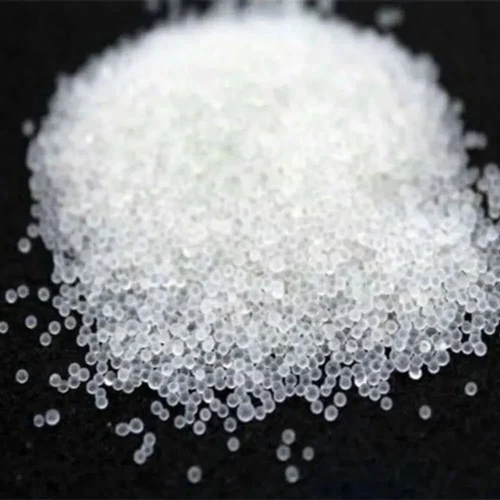
What is Glass Bead Abrasive GB-2 / Coarse I ‘O’?
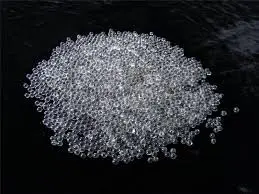
GB-2 (Coarse I ‘O’) is a high-density, spherical soda-lime glass abrasive with a particle size range of 600-800 microns. It is the coarsest standard grade available, engineered for applications requiring high kinetic energy transfer, such as deep shot peening and the removal of extremely stubborn industrial contaminants.
What are the main uses for 600-800 micron glass beads?
Due to their significant mass and diameter, GB-2 beads are utilized for:
-
Deep Shot Peening: Creating high-magnitude compressive stress layers in thick-walled metal parts to prevent stress corrosion cracking.
-
Heavy Scale Removal: Stripping thick heat-treatment scale, heavy rust, and rugged coatings from large industrial castings.
-
Aggressive Deburring: Removing large flashes and burrs from heavy-duty machined or forged components.
-
Anti-Slip Surfaces: Used as an additive in coatings to provide a high-profile, textured grip.
How does GB-2 (600-800 μm) differ from GB-3 (425-600 μm)?
The GB-2 (Coarse I) is substantially larger than the GB-3. While both are “coarse,” the GB-2 provides greater impact force per bead. This makes it more efficient for structural peening on heavy machinery, whereas GB-3 is better suited for general surface finishing and cleaning. GB-2 will result in a more pronounced “dimpled” or textured surface.
Is the 600-800 micron size safe for delicate parts?
No. Because of the high impact energy generated by the 600-800 μm size, it is generally not recommended for thin-gauge metals or delicate precision parts, as it may cause surface warping or excessive peening. For delicate work, a finer grade (like GB-4 or GB-5) is preferred.
Technical Specifications for GB-2 Coarse I ‘O’
| Property | Specification |
| Micron Size | 600 – 800 μm |
| U.S. Mesh Size | ~20 – 30 Mesh |
| Shape | Spherical (≥ 70% roundness) |
| Hardness | 6 – 7 Mohs |
| Appearance | Transparent Spheres |
What blast pressure is recommended for GB-2 beads?
To maximize the life of the media, GB-2 beads should typically be used at pressures between 45-70 PSI. While they are durable, exceeding 80 PSI with such large beads can lead to faster fracturing upon impact, turning the spherical media into angular glass shards.
Reviews
There are no reviews yet.