Introduction
In industrial surface preparation, the choice of abrasive media is not just a technical decision—it directly impacts cost, efficiency, safety, and final product quality.
Across manufacturing hubs like Delhi NCR, Faridabad, and Gurugram, industries often struggle with:
- Poor surface finish
- High abrasive consumption
- Compliance issues with environmental norms
This happens primarily due to incorrect abrasive selection.
This guide provides a deep, technical, and practical breakdown of the most widely used abrasive media in India, along with standards, data, and expert insights to help you make the right decision.
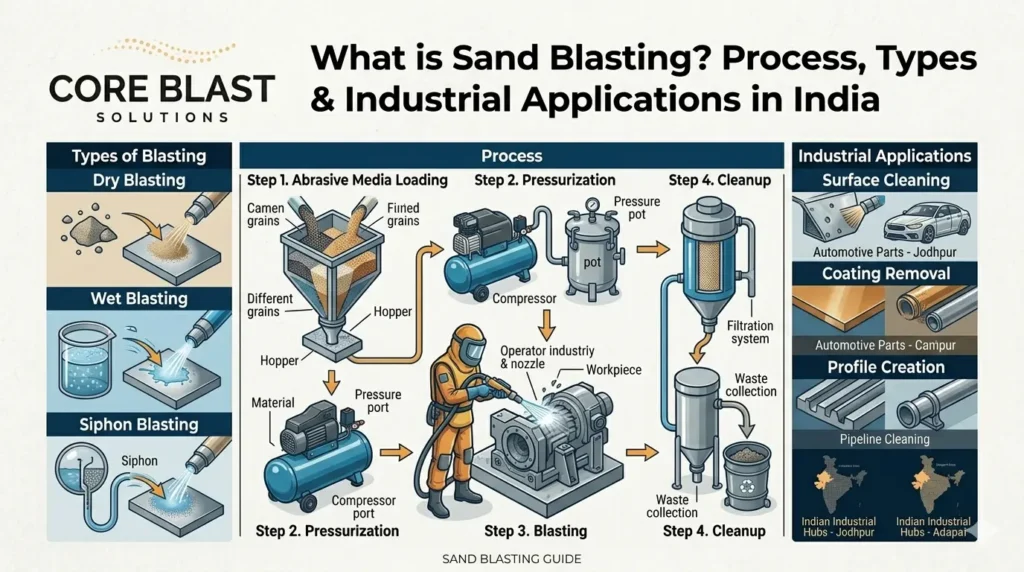
What is Abrasive Media in Sand Blasting?
Abrasive media are particles used to clean, polish, or profile a surface by impact action. Their effectiveness depends on:
- Hardness (Mohs scale)
- Particle shape (angular vs spherical)
- Density and size
- Reusability cycles
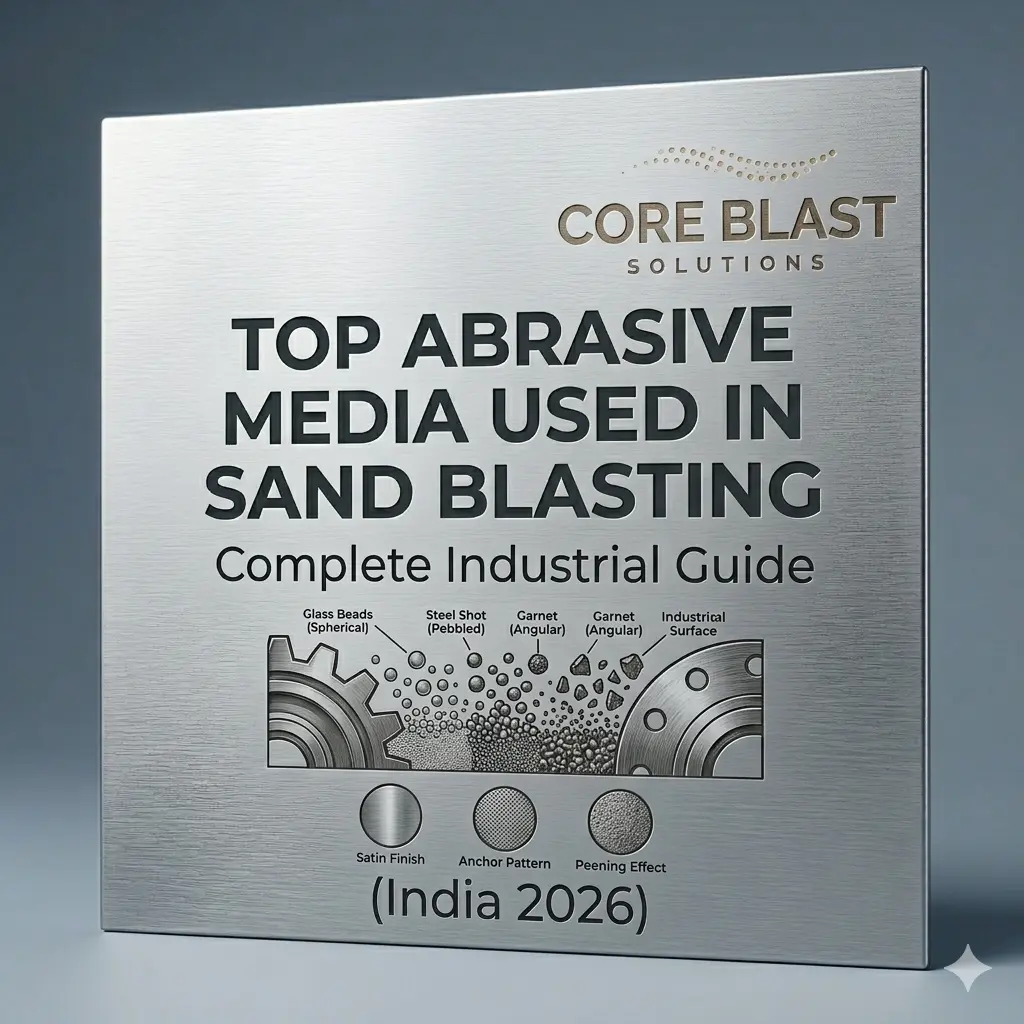
🔝 Top Abrasive Media Used in India
1. Glass Beads
Glass beads are spherical, non-metallic abrasives made from soda-lime glass.
Key Characteristics:
- Hardness: 5–6 Mohs
- Shape: Spherical
- Finish: Smooth, satin
Applications:
- Stainless steel finishing
- Aerospace components
- Automotive polishing
Why Industries Use It:
- Produces non-damaging, cosmetic finish
- Silica-free and safer than sand
2. Steel Shot
Steel shot is a highly durable, spherical metallic abrasive widely used in heavy industries.
Key Characteristics:
- Hardness: 6–7 Mohs
- Reusability: 1000+ cycles
- Density: ~7.8 g/cm³
Applications:
- Shot peening
- Foundry cleaning
- Surface preparation before coating
Why It Dominates Industry:
- Extremely cost-effective over long term
- Ideal for automated blasting systems
3. Steel Grit
Steel grit is produced by crushing steel shot into angular particles.
Key Characteristics:
- Hardness: 7–8 Mohs
- Shape: Angular
- Aggressiveness: High
Applications:
- Heavy rust removal
- Shipbuilding
- Structural steel cleaning
Why It’s Critical:
- Creates deep surface profile for coating adhesion
4. Garnet
A natural mineral abrasive widely used in eco-sensitive environments.
Key Characteristics:
- Hardness: 7–8 Mohs
- Low dust generation
- Moderate reusability
Applications:
- Waterjet cutting
- Surface preparation
5. Aluminum Oxide
One of the hardest blasting media available.
Key Characteristics:
- Hardness: 9 Mohs
- Highly reusable
- Sharp cutting action
Applications:
- Heavy-duty blasting
- Industrial cleaning
- Etching
📊 Detailed Comparison Table
| Property | Glass Beads | Steel Shot | Steel Grit | Garnet | Aluminum Oxide |
|---|---|---|---|---|---|
| Hardness (Mohs) | 5–6 | 6–7 | 7–8 | 7–8 | 9 |
| Shape | Spherical | Spherical | Angular | Angular | Angular |
| Reusability | Medium | Very High | High | Medium | Very High |
| Finish | Smooth | Uniform | Rough | Semi-rough | Aggressive |
| Cost Efficiency | Medium | High | Medium | Medium | High |
📐 Technical Data Sheet
| Parameter | Range |
|---|---|
| Particle Size | 50 microns – 2.5 mm |
| Blasting Pressure | 60–120 PSI |
| Surface Profile | 25–125 microns |
| Media Consumption | 8–25 kg/m² (varies by media) |
🏭 Industrial Applications in India
Automotive Industry
- Shot peening with steel shot
- Surface finishing with glass beads
Construction & Infrastructure
- Steel grit for rust removal
- Surface prep for coatings
Shipbuilding & Oil & Gas
- Heavy-duty cleaning using steel grit
- Corrosion protection
Railways & Heavy Engineering
- Maintenance and refurbishment
🇮🇳 BIS & Indian Standards (Critical for Buyers)
When selecting abrasive media in India, compliance with Bureau of Indian Standards (BIS) is crucial.
Relevant Standards:
- IS 11124 / IS 11126 Series
→ Covers specifications for non-metallic blasting abrasives - IS 4606
→ Standard for steel shot and grit - IS 320
→ Particle size grading
👉 These standards ensure:
- Consistent particle size
- Quality control
- Safe industrial usage
⚠️ Environmental & Safety Compliance
Industrial blasting operations must comply with guidelines from the Central Pollution Control Board.
Key Legal Framework:
- Environment (Protection) Act, 1986
- Air (Prevention and Control of Pollution) Act, 1981
👉 CPCB Official Website:
https://cpcb.nic.in
⚠️ Health Risks
Improper abrasive blasting can cause:
- Lung damage (silicosis)
- Eye injuries
- Hearing loss
According to the Occupational Safety and Health Administration:
👉 https://www.osha.gov/abrasive-blasting
Abrasive blasting without proper controls can lead to serious occupational diseases.
Mandatory Safety Measures
- Use PPE (respirators, helmets, gloves)
- Install dust collectors
- Avoid silica sand
- Ensure ventilation systems
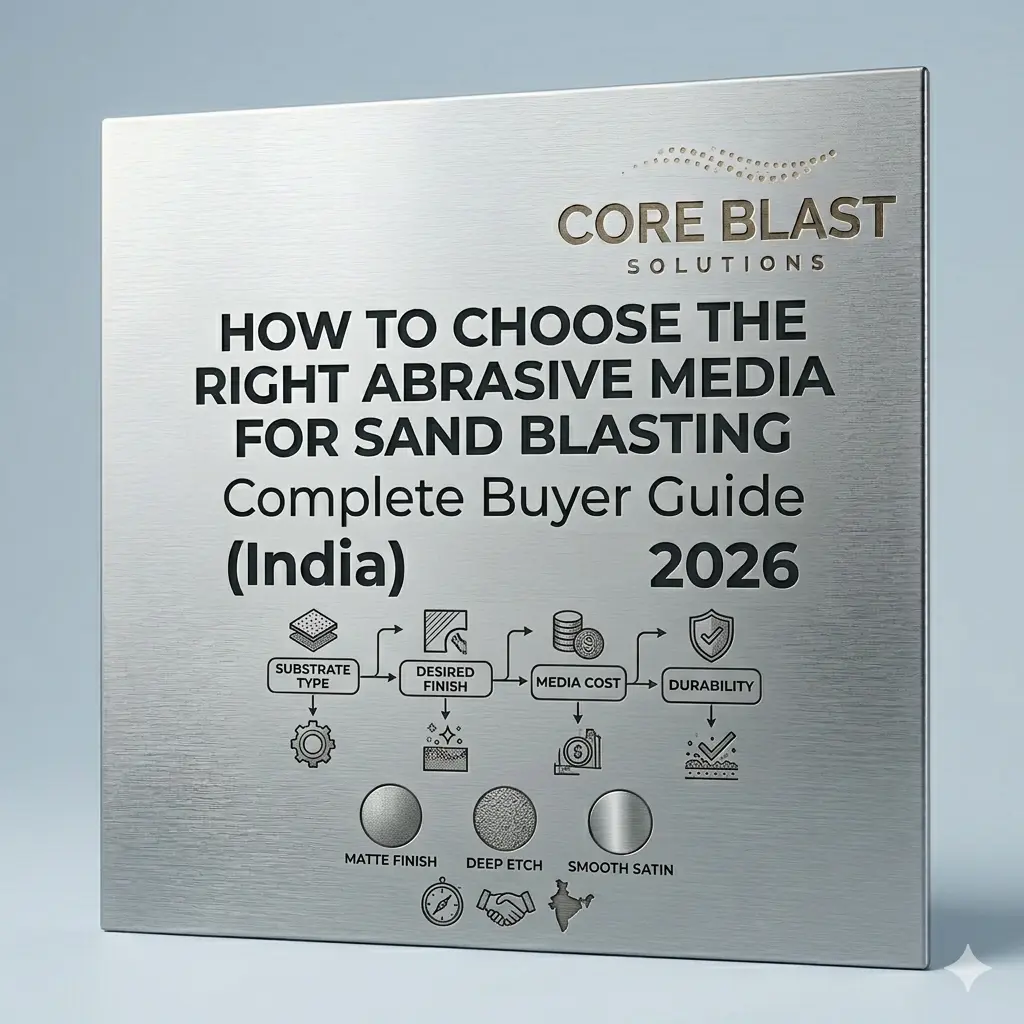
🧠 Buyer Guide: How to Choose the Right Abrasive
| Requirement | Best Media |
|---|---|
| Smooth finishing | Glass Beads |
| Long-term cost saving | Steel Shot |
| Heavy rust removal | Steel Grit |
| Eco-friendly blasting | Garnet |
| High precision cutting | Aluminum Oxide |
❌ Common Mistakes to Avoid
- Selecting media based only on price
- Ignoring BIS standards
- Using silica sand (health risk)
- Not considering reusability
- Poor storage and handling
💡 Pro Tips from Industry Experts
- Always calculate cost per cycle, not per kg
- Use steel shot in automated systems for maximum ROI
- Maintain proper storage to prevent contamination
- Test abrasive on sample surface before bulk use
📈 Industry Insights
With stricter pollution control in Delhi NCR, industries are rapidly shifting toward:
- Reusable metallic abrasives
- Dust-controlled blasting systems
- Compliance-driven operations
This trend is expected to grow with increasing enforcement by regulatory bodies.
❓ Frequently Asked Questions
Which abrasive media is best for sand blasting?
It depends on the application. Glass beads for finishing, steel shot for durability, and steel grit for aggressive cleaning.
Are steel abrasives better than non-metallic ones?
Steel abrasives offer higher reusability and long-term cost benefits, making them ideal for industrial use.
What is the safest abrasive media?
Glass beads and garnet are considered safer alternatives to silica sand.
Why is BIS certification important?
It ensures consistent quality, safety, and compliance with Indian industrial standards.
Can abrasive media be reused?
Yes. Steel shot and aluminum oxide have very high reuse cycles.
What industries use abrasive blasting in India?
Automotive, construction, shipbuilding, railways, and heavy engineering industries widely use it.
Conclusion
Choosing the right abrasive media is a strategic industrial decision that directly impacts performance, cost, and compliance.
Understanding material properties, applications, and standards ensures:
- Better surface quality
- Lower operational cost
- Safer working conditions
Contact Us
For high-quality abrasive media and expert consultation, connect with Core Blast Solutions, Delhi.
We offer:
- Glass beads, steel shot, steel grit
- BIS-compliant materials
- Reliable supply across India
Contact us today to get the right abrasive solution for your industry.