Introduction
In industries where surface quality determines product performance, sand blasting has become an essential process. Whether it’s removing corrosion from steel structures or preparing surfaces for coating, the right blasting method significantly improves durability and finish.
However, many manufacturers in Delhi NCR and across India still face challenges in selecting the right process, abrasive media, and safety practices.
What is Sand Blasting?
Sand blasting (abrasive blasting) is a process where abrasive particles are propelled at high velocity to clean or prepare surfaces.
Key Functions:
- Rust and scale removal
- Paint removal
- Surface preparation for coating
- Surface finishing
Due to health risks, silica sand is now largely replaced with safer alternatives like glass beads, steel shot, and steel grit.
👉 Authoritative reference:
How the Sand Blasting Process Works
- Surface inspection
- Abrasive selection
- Equipment setup (pressure, nozzle size)
- Blasting operation
- Final inspection
Types of Sand Blasting
1. Dry Sand Blasting
- Most common method
- Used for rust and paint removal
2. Wet Sand Blasting
- Uses water to reduce dust
- Suitable for pollution-sensitive areas
3. Wheel Blasting
- High-speed rotating wheel
- Ideal for large-scale industries
4. Vacuum Blasting
- Dust-free closed system
- Used in controlled environments
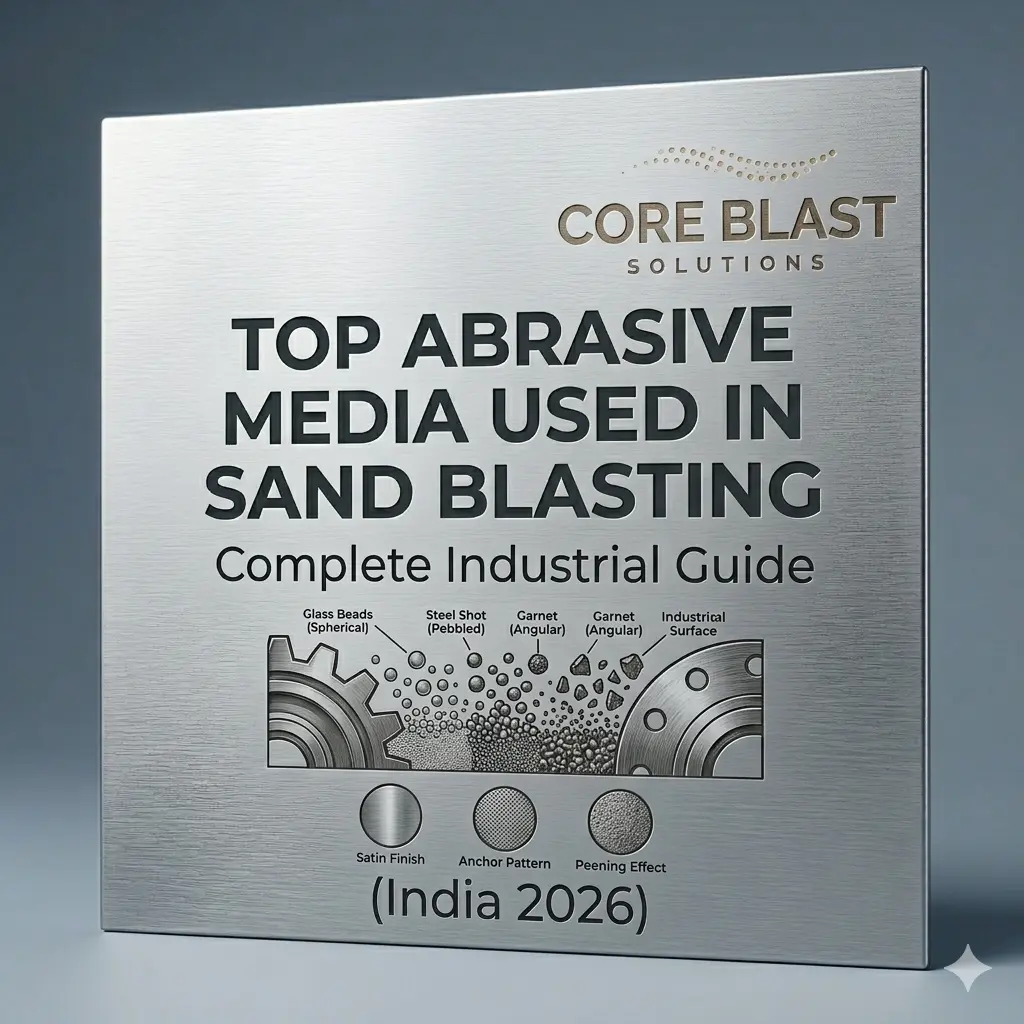
Abrasive Media Comparison
| Property | Glass Beads | Steel Shot | Steel Grit |
|---|---|---|---|
| Shape | Spherical | Spherical | Angular |
| Hardness (Mohs) | 5–6 | 6–7 | 7–8 |
| Reusability | 20–30 cycles | 1000+ cycles | 200–300 cycles |
| Surface Finish | Smooth | Uniform | Rough |
Technical Data Sheet
| Parameter | Glass Beads | Steel Shot | Steel Grit |
|---|---|---|---|
| Particle Size Range | 50–850 microns | 0.2–2.5 mm | 0.2–2.0 mm |
| Density | ~2.5 g/cm³ | ~7.8 g/cm³ | ~7.6 g/cm³ |
| Surface Finish | Satin | Matte | Rough Profile |
Industrial Applications in India
- Manufacturing units (surface prep)
- Automotive sector (component cleaning)
- Shipbuilding (corrosion removal)
- Construction & infrastructure
- Railways and heavy engineering
Delhi NCR (Faridabad, Gurugram, Ghaziabad) is a major hub for these applications.
Benefits of Sand Blasting
- Fast and efficient
- Improves coating adhesion
- Enhances durability
- Reduces manual effort
- Cost-effective for large operations
Safety and Environmental Compliance
⚠️ Health Risks
Dust from blasting can cause serious respiratory diseases like silicosis.
According to Occupational Safety and Health Administration, improper abrasive blasting exposure can lead to lung damage and long-term illness.
📜 Indian Environmental Regulations
In India, industrial air pollution is regulated by the Central Pollution Control Board.
👉 Official CPCB reference:
These guidelines require:
- Dust control systems
- Emission limits
- Workplace safety compliance
Essential Safety Measures
- Use PPE (respirators, gloves, helmets)
- Install dust collectors
- Ensure ventilation
- Avoid silica sand
Buyer Guide
| Requirement | Recommended Method |
|---|---|
| Smooth finishing | Glass beads |
| Cost efficiency | Steel shot |
| Heavy rust removal | Steel grit |
| Low dust environment | Wet blasting |
| High production | Wheel blasting |
Common Mistakes to Avoid
- Wrong abrasive selection
- Ignoring safety standards
- Excessive pressure usage
- Poor maintenance
- Not considering reuse cycles
Pro Tips
- Test on a small area before full blasting
- Use reusable abrasives for cost savings
- Maintain consistent pressure
- Choose quality media for better results
Frequently Asked Questions
What is sand blasting used for?
It is used to clean, smooth, or prepare surfaces by removing rust, paint, and contaminants.
Which abrasive is best?
Glass beads for finishing, steel shot for durability, steel grit for aggressive cleaning.
Is sand blasting safe?
Yes, if proper PPE and dust control systems are used.
Why is silica sand avoided?
Because it produces hazardous dust that can cause lung disease.
What industries use sand blasting?
Manufacturing, automotive, construction, shipbuilding, and railways.
Is sand blasting cost-effective?
Yes, it improves efficiency and reduces long-term costs.
Conclusion
Sand blasting is a critical process for surface preparation in modern industries. Selecting the right method and abrasive ensures better performance, lower costs, and compliance with safety standards.
Contact Us
For high-quality abrasive media and expert consultation, contact Core Blast Solutions, Delhi.
We provide:
- Glass beads, steel shot, steel grit
- Reliable supply across India
- Application-based guidance
Reach out today for the right blasting solution.