

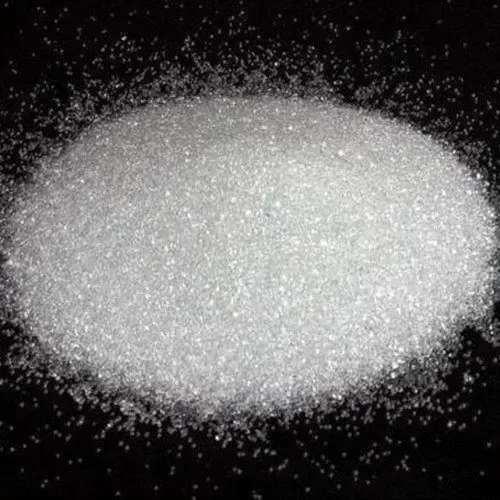
Premium Glass Bead Abrasive Media (Complete Industrial Range: GB-2 to GB-13) | Coreblast Solutions
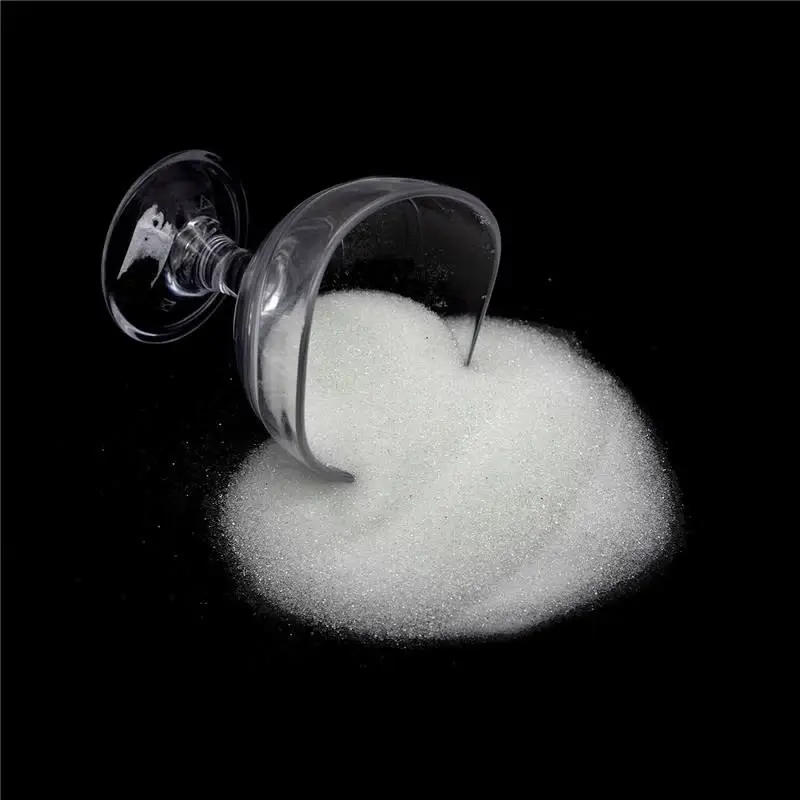
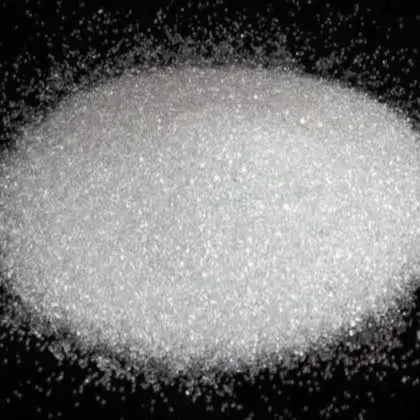
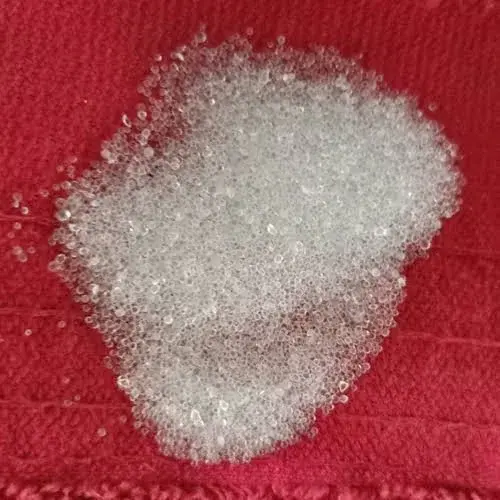
High-precision, spherical soda-lime glass bead abrasive media for sandblasting, shot blasting, and surface conditioning. Available in the complete master range of industrial grades (GB-2, GB-3, GB-4, GB-5, GB-6, GB-7, GB-8, GB-9, GB-10, GB-11, GB-12, GB-13) spanning 45 to 800 microns.
100% crystalline silica-free and manufactured to rigorous technical standards. Ideal for precision surface cleaning, satin and matte finishing, deburring, and metal peening without changing the dimensional tolerances of your workpieces.
-
Available Sizes: 20 Mesh to 325 Mesh (Coarse, Medium, Fine, and Ultra-Fine)
-
Shape: High-Spherical Roundness (Roundness Index $\ge$ 80%)
-
Packaging: 25 Kg moisture-proof heavy-duty bags / Custom palletized lots
Product Overview
Coreblast Solutions is a leading industrial supplier of premium Soda-Lime Glass Bead Abrasives. Our master series of spherical glass media is engineered for non-destructive surface preparation. Because these beads are perfectly round, they clean and condition metal surfaces by impact rather than cutting. This ensures the complete removal of contaminants—such as heat scale, rust, and carbon deposits—without removing the underlying base metal or altering machined sharp edges.
From heavy-duty casting reclamation using coarse grades to micro-luster cosmetic finishing on surgical instruments using ultra-fine variations, our complete inventory offers predictable, repeatable results across all industrial setups.
Master Industrial Grades & Technical Size Chart
Use the master technical reference matrix below to select the exact glass bead grade variant for your machinery and surface finish specifications. All grades are fully stocked for bulk commercial supply.
| Product Grade | Industry Nomenclature | Micron Range (μm) | U.S. Sieve / Mesh Size | Primary Industrial Application | Surface Finish Result |
| GB-2 | Coarse I / ‘O’ Grade | 600 – 800 | 20 – 30 Mesh | Heavy foundry cleaning, large-scale paint removal, aggressive peening | Coarse Matte Texture |
| GB-3 | Coarse II / ‘BL’ Grade | 425 – 600 | 30 – 40 Mesh | Aggressive cleaning, mill scale removal, heavy machine components | Standard Coarse Matte |
| GB-4 | Medium ‘C’ Grade | 250 – 425 | 40 – 60 Mesh | Precision shot peening, engine rebuilding, stress-relief profiling | Uniform Matte Finish |
| GB-5 | Medium / Heavy-Duty | 212 – 425 | 40 – 70 Mesh | Automotive restoration, mold cleaning, removing weld discoloration | Medium Matte Texture |
| GB-6 | General Purpose Medium | 212 – 300 | 50 – 70 Mesh | High-speed multi-purpose cleaning, balancing speed and life | Fine Matte Finish |
| GB-7 | Standard Finishing / ‘AB’ | 180 – 300 | 50 – 80 Mesh | Stainless steel & aluminum fabrication profiling, light deburring | Uniform Satin / Bright |
| GB-8 | Fine Medium / ‘AC’ Grade | 125 – 250 | 60 – 120 Mesh | Cleaning delicate automotive parts, blending machining marks | Smooth Satin Finish |
| GB-9 | Fine Finishing / ‘AD’ Grade | 106 – 212 | 70 – 140 Mesh | Tool and die maintenance, glass mold cleaning, light peening | Soft Satin Effect |
| GB-10 | Super Fine I / ‘AF’ Grade | 90 – 150 | 100 – 170 Mesh | High-precision electronic housings, fine deburring | Micro-Satin Finish |
| GB-11 | Super Fine II | 53 – 106 | 140 – 270 Mesh | Critical tolerance components, aerospace maintenance cleaning | Low-Reflective Matte |
| GB-12 | Ultra Fine I / ‘AH’ Grade | 45 – 90 | 170 – 325 Mesh | Laboratory instruments, precision optical mold polishing | High-Luster Satin |
| GB-13 | Ultra Fine II / ‘AQ’ Grade | < 53 | 270 Mesh & Finer | Medical implants, aerospace turbine parts, micro-deburring | High-Luster Polished |
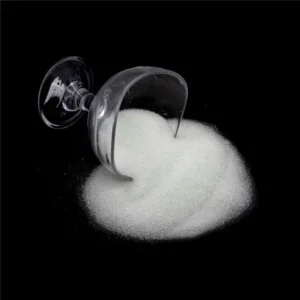
Target Industries & Applications
Our premium glass beads are cross-industry standards relied upon by highly specialized technical sectors:
🩺 Medical Device & Implant Manufacturing
-
Applications: Used primarily with ultra-fine grades (GB-12 and GB-13) to finish titanium orthopedic implants, bone screws, and stainless steel surgical instruments.
-
Purpose: Provides a uniform, micro-peened, non-glare surface that reduces glare under operating room lights and removes all micro-burrs without altering critical micro-tolerances.
✈️ Aerospace & Defense
-
Applications: Controlled shot peening of aircraft landing gear, turbine blades, jet engine components, and structural rivets.
-
Purpose: Introduces deep compressive stress layers to combat metal fatigue, stress corrosion cracking, and structural failure over extended operational flight hours.
🚗 Automotive Rebuilding & Manufacturing
-
Applications: Refurbishing engine blocks, pistons, cylinder heads, aluminum wheels, and transmission casings.
-
Purpose: Rapidly strips hard carbon deposits, old gaskets, varnish, and grease from cast aluminum and steel parts without changing combustion chamber volumes or damaging soft alloy surfaces.
🏭 Tool, Die, and Mold Maintenance
-
Applications: Cleaning compression molds, rubber injection molds, die-cast tooling, and glass manufacturing molds.
-
Purpose: Safely cleans residual release agents, plastic residues, and heat scale without rounding off critical mold edges or sharp details, extending tooling longevity.
🔧 Stainless Steel & Sheet Metal Fabrication
-
Applications: Blasting architectural hardware, storage tanks, consumer appliances, and welded frames.
-
Purpose: Obliterates weld discoloration (weld burn), blends handling marks, and creates a uniform, fingerprints-resistant “satin” or “matte” architectural finish.
🚢 Shipbuilding, Marine, and Heavy Infrastructure
-
Applications: Cleaning precision internal marine hardware, non-ferrous piping, and high-strength fasteners.
-
Purpose: Strips away salt crusts, rust, and specialized marine coatings while preventing the structural erosion caused by rougher angular minerals.
Material Standards & Product Characteristics
-
Zero Free Silica: 100% free of crystalline silica. Eliminates the critical health risks of silicosis associated with raw blasting sand.
-
Chemically Inert: Made from premium soda-lime glass that does not react with the target metal. It leaves no ferrous or corrosive residues, entirely preventing “after-rust” on non-ferrous metals like aluminum, copper, and brass.
-
High Operational Lifecycle: High structural roundness prevents premature fracture. The media can be collected, separated, and recycled 5 to 12 times within standard cabinet operations, minimizing material waste.
-
Consistent Sizing: Manufactured under strict quality screening protocols to eliminate size variations within a designated grade, ensuring a completely uniform surface profile.
Key Performance Benefits
-
Non-Destructive Action: Spherical geometry disperses kinetic energy uniformly upon contact, lifting surface scale and dirt without pitting or eroding thin-walled components.
-
Compressive Stress Relief: Medium-to-coarse grades (GB-2 to GB-6) are optimal for shot peening. They induce a layer of protective compressive stress that seals micro-fissures and increases resistance to fatigue failure.
-
Cosmetic Masking: Fine and ultra-fine grades (GB-7 to GB-13) blend out thermal discoloration, tool marks, and minor handling scratches on visible metal surfaces.
Operational Settings & Guidelines
To optimize your blast media lifespan and protect your machinery, apply these standard working settings:
-
Machine Compatibility: Engineered for use in both Suction-Feed (Venturi) cabinet units, Direct Pressure Pot blast systems, and automated industrial wheel-blast lines.
-
Air Pressure Management: For general operations, hold air pressures between 40 to 65 PSI. Avoid exceeding 80 PSI as excessive pressure shatters the spheres into unusable dust, lowering workspace visibility and driving up media costs.
-
Nozzle Angle Positioning: Use a 45° to 60° angle for high-efficiency cleaning and cosmetic blending. Use a perpendicular 90° angle specifically when executing high-impact peening for metal stress relief.
Technical Product Specifications
-
Material Composition: Premium Soda-Lime Glass
-
Shape Morphology: High-Spherical Roundness ($\ge$ 80%)
-
Hardness Profile: 6.0 – 7.0 Mohs
-
Specific Gravity: Approx. 2.5 $g/cm^3$
-
Bulk Density: Approx. 1.5 – 1.6 $g/cm^3$
-
Free Silica Content: 0%
The Master Technical Compendium: Glass Bead Abrasive Media
Comprehensive Industrial, Metallurgical, and Operational FAQ
Section 1: Fundamental Mechanics & Surface Engineering Kinetics
Q1: What are the fundamental physical and chemical properties of premium glass bead abrasives?
A: Premium glass bead abrasives are manufactured from high-quality soda-lime silicate glass. Chemically, they consist of approximately 70-75% SiO2 (bound as amorphous glass, not crystalline silica), 12-15% Na2O, and 7-12% CaO. Physically, they exhibit a hardness profile of 6.0 to 7.0 on the Mohs scale (approx. 515-610 HV Vickers), a specific gravity of 2.45 to 2.52 g/cm³, a bulk density of roughly 1.5 to 1.6 g/cm³, and a high roundness threshold where 80% or more of the particles are true, defect-free spheres..
Q2: How does the impact mechanism of a spherical glass bead differ fundamentally from angular media like garnet or aluminum oxide?
A: Angular media cleans and profiles via micro-cutting, abrasion, and shearing, which aggressively removes the top layers of the substrate and alters dimensions. Conversely, spherical glass beads operate on the principle of deformation and displacement via kinetic energy transfer. Upon perpendicular or near-perpendicular impact, the sphere strikes the metal, displacing surface contaminants through compression and a micro-peening action. This lifts away scale, carbon, and oxides by fracturing the brittle foreign deposits without removing the ductile base metal beneath, maintaining a zero-dimensional change profile.
Q3: What is the scientific correlation between glass bead micron size, mass, velocity, and surface finish texture ($R_a$)?
A: The surface roughness ($R_a$) is governed by the kinetic energy formula:
Coarse grades (e.g., GB-2, GB-3) possess high mass ($m$), producing deeper, overlapping micro-dimples that result in a more textured, lower-reflectivity matte surface ($R_a \approx 1.5\text{ to }3.0\ \mu\text{m}$). As you scale down to ultra-fine grades (e.g., GB-12, GB-13), particle mass drops exponentially. Even at identical blast pressures (velocities, $v$), these micro-spheres transfer far less kinetic energy per impact, yielding shallow, tightly clustered dimples that reflect light uniformly, resulting in a bright satin or semi-polished surface ($R_a \le 0.4\ \mu\text{m}$).
Q4: How does air pressure optimization influence the degradation rate of soda-lime glass spheres?
A: Glass is an amorphous material with high compressive strength but relatively low tensile strength and high brittleness. When blasted against a hard substrate at pressures below 65 PSI, the impact forces stay safely within the elastic deformation limits of the glass sphere. When pressures climb past 80 PSI, the velocity increases to a point where the impact stress exceeds the dynamic structural threshold of the soda-lime matrix, causing immediate shattering into angular fractions on the first or second cycle. Keeping pressures between 45 and 65 PSI optimizes cleaning speeds while maintaining an extended media lifecycle (5 to 12 cycles).
Q5: What is the structural definition of “Roundness Index,” and why is it critical for aerospace peening?
A: The Roundness Index measures the percentage of true spheres relative to egg-shaped particles, fused beads, or angular shards within a specific batch. For critical operations like aerospace shot peening, standards mandate a high roundness index (typically $\ge 80\%$ or $\ge 90\%$). If a batch contains too many non-spherical or fractured particles, the energy transfer across the surface becomes uneven. Instead of forming uniform, smooth dimples that introduce uniform compressive stress, the sharp edges introduce micro-notches, scratches, or stress concentration points that lower the metal’s fatigue life.
Section 2: International Technical Standards & Certifications
Q6: Which international specifications govern the screening, roundness, and testing metrics of industrial glass beads?
A: Industrial glass beads are strictly regulated by several key global and military specifications:
-
AMS 2431/6: Aerospace Material Specification for glass bead shot peening.
-
MIL-PRF-9954D: The benchmark US Military specification outlining strict sizing parameters and roundness metrics for sandblasting applications.
-
ISO 11126-5: International framework classifying and specifying non-metallic blast-cleaning abrasives.
-
ASTM D1214: The standard test method for determining the sieve analysis and particle size distribution of glass spheres.
Q7: What are the differences between MIL-PRF-9954D and AMS 2431/6 standards for procurement?
A: MIL-PRF-9954D is primarily a general-purpose industrial and military maintenance specification. It outlines 13 standard size gradings with specific sieve requirements and mandates that true spheres make up at least $70\text{ to }80\%$ of the volume. AMS 2431/6 is a highly restrictive aerospace peening standard. It requires much narrower size distributions, stricter sampling rules, lower limits for flat or broken particles ($\le 10\%$), and strict chemical testing to prevent any trace metal contamination on critical flight components.
Q8: How do Coreblast Solutions glass beads comply with current occupational health and environmental safety directives?
A: Our glass bead abrasives are entirely crystalline silica-free ($0\%\text{ Free Silica}$), ensuring complete compliance with OSHA, NIOSH, and European safety limits for respirable crystalline silica. Because they are made from inert soda-lime glass, they contain no hazardous heavy metals like lead, cadmium, or hexavalent chromium. This ensures safe operations and simplifies waste disposal, keeping workspaces in line with international environmental guidelines.
Q9: What are the target chemical limits for contaminant metals within aerospace-certified glass beads?
A: Under stringent aerospace guidelines like AMS 2431/6, trace metallic impurities are heavily restricted. Free iron ($\text{Fe}$) must typically remain under 0.1% by weight to eliminate the risk of embedding ferrous particles into non-ferrous substrates. Heavy elements like Lead ($\text{Pb}$) and Arsenic ($\text{As}$) must be virtually non-existent (often restricted to $\le 100\text{ ppm}$ or less) to guarantee the material is chemically safe and non-reactive at high operating temperatures.
Q10: How is the sizing of glass beads verified in a QA laboratory to meet ASTM standards?
A: Sizing is verified via mechanical dry sieve agitation in accordance with ASTM D1214. A representative sample of the glass beads is placed into a stack of calibrated U.S. Standard Mesh sieves arranged hierarchically from the largest opening down to the finest pan. The stack is mechanically vibrated for a designated duration. The mass retained on each sieve is weighed to ensure the particle size distribution falls precisely within the upper, middle, and lower control limits of the targeted grade designation.
Section 3: Industry-Specific Applications
Q11: In Medical Implant Manufacturing, why are ultra-fine glass beads (GB-12/GB-13) mandatory for finishing titanium and cobalt-chrome components?
A: Surgical implants and orthopedic devices require pristine surface finishes with zero metallic or chemical contamination. Blasting with ultra-fine glass beads clean out laser-sintering residues and manufacturing lines, reducing the surface roughness ($R_a$) down to sub-micron levels. This process produces a soft matte appearance that limits glare under operating room lights, while ensuring the underlying dimensions of the high-tolerance threads and fittings remain unchanged.
Q12: How does the aerospace industry utilize glass beads for controlled shot peening of structural components?
A: Critical parts like jet engine turbine blades, wing spars, and aircraft landing gear are subject to cyclic operational loads that cause metal fatigue. Controlled blasting with specialized peening grades (GB-4 or GB-5) impacts the metal surface, causing local plastic deformation. This creates a uniform layer of residual compressive stress that acts as a structural shield, stopping micro-cracks from forming and extending the operational lifespan of the component.
Q13: How does glass bead blasting prepare automotive engine assemblies for high-performance rebuilding?
A: During engine rebuilding, cylinder heads, intake manifolds, and aluminum pistons must be stripped of baked-on carbon, oxidized scale, and old gasket sealants. Using a medium grade like GB-7 or GB-8 cleans these components without eroding soft aluminum alloys or expanding the critical dimensions of valve guides, bearing journals, and combustion chambers. It also uncovers hidden stress cracks that might otherwise go unnoticed.
Q14: What role do glass beads play in maintaining tool, die, and mold cavities across the rubber and glass industries?
A: Injection molds and die tooling build up layers of release agents, polymer residues, and oxidation over time, which compromises the surface quality of manufactured parts. Blasting with medium-fine beads safely clears out these deposits without rounding sharp edges, altering precision parting lines, or marring the polished finishes of the tool cavities, preserving production quality.
Q15: Why is glass bead blasting preferred for finishing architectural stainless steel structures and food-grade tanks?
A: Mechanical welding of stainless steel leaves behind unsightly heat tint, discoloration, and slag spots. Blasting with GB-6 or GB-7 removes these surface defects and blends handling marks to create a clean, uniform satin finish. Because the beads are completely iron-free, they do not leave behind any ferrous particles, preventing rust spots and helping the stainless steel form its protective chromium-oxide passivation layer.
Section 4: Technical & Advanced Industry Trends
Q16: How are fine glass beads applied in the post-processing of components built via Additive Manufacturing (3D Metal Printing)?
A: Parts made through Direct Metal Laser Sintering (DMLS) or Selective Laser Melting (SLM) often have rough surface textures due to partially fused powder particles. Automated blasting enclosures use fine glass beads (GB-10 to GB-12) to smooth out these surface defects and remove loose powder particles. This process relieves surface tensile stresses from the printing process, improving the finish of intricate, near-net-shape components.
Q17: What are the mechanical and operational advantages of Wet Slurry Blasting over conventional Dry Blasting?
A: Wet slurry blasting mixes glass beads with water before accelerating the mixture through the blast nozzle. The water acts as a fluid cushion, damping the vertical impact while maintaining a smooth, sliding scrubbing motion across the surface. This reduces particle breakdown by up to $50\%$, eliminates static electricity and process dust, and delivers a highly uniform satin finish with no abrasive particles embedded in soft metals.
Q18: Why are ceramic beads (zirconium silicate) considered a threat to glass beads, and when should you stick with glass?
A: Ceramic beads are denser and tougher than glass beads, meaning they break down slower and can lower media consumption costs over long production runs. However, glass beads remain the industry favorite for general surface conditioning due to their lower initial cost. Glass beads are also preferred when processing delicate, thin-walled parts where the higher impact energy of ceramic beads might cause warping or unwanted dimensional changes.
Q19: How can glass bead blasting replace chemical etching lines prior to aluminum anodizing?
A: Blasting aluminum with GB-7 or GB-8 media creates a uniform micro-dimpled texture that diffuses light, matching the appearance of chemical etching. Transitioning to this mechanical process allows manufacturing facilities to cut down on chemical waste and avoid the hazardous acidic or alkaline wastewater treatment steps common to traditional anodizing preparation lines.
Q20: How do automated CNC robotic blast systems optimize glass bead lifecycles compared to manual operations?
A: Manual operators often vary their blast distance, angle, and speed, which can lead to uneven finishes and accelerated bead shattering from over-concentrated impacts. Automated CNC robotic systems use programmed tool paths to maintain an optimal nozzle distance (typically $6\text{ to }8\text{ inches}$) and a consistent $45^\circ\text{ to }60^\circ$ blast angle. This approach standardizes energy distribution, reduces media breakdown, and keeps the working particle mix uniform.
Section 5: Practical Problem Solving & Operational Troubleshooting
Q21: PROBLEM: The blast cabinet’s visibility drops quickly, and the media turns to fine dust after only a few cycles. What is the root cause and remedy?
A:
-
Root Cause: The blast pressure is likely set too high (above $80\text{–}90\text{ PSI}$), which exceeds the dynamic strength of the glass spheres and shatters them instantly on impact. Alternatively, the cabinet’s dust collector or cyclone separator may not be exhausting fractured fines correctly.
-
Remedy: Lower the operating air pressure to between 45 and 65 PSI. Check your dust collection system to ensure the air-wash or cyclone classifier is actively removing broken dust particles while returning full-sized, spherical beads to the storage hopper.
Q22: PROBLEM: Parts made of aluminum and stainless steel show unexpected rust spots a few weeks after being blasted with glass beads. How did this happen, and how can it be fixed?
A:
-
Root Cause: Cross-contamination. The blast cabinet or the glass beads themselves were likely used previously to clean cast iron or carbon steel parts. This leaves behind fine iron dust that embeds into the non-ferrous parts, triggering galvanic corrosion and rust spots over time.
-
Remedy: Keep dedicated cabinets or separate batches of media specifically for non-ferrous metals (aluminum, stainless steel, brass). If a system becomes contaminated, clean out the cabinet completely, flush the hoses, and replace the entire media charge with fresh, iron-free glass beads.
Q23: PROBLEM: When using fine glass bead grades like GB-11 or GB-12, the media stops flowing smoothly and pulses or chokes at the nozzle. What is the cause?
A:
-
Root Cause: Fine glass beads absorb moisture from compressed air lines quite easily. This humidity causes the micro-particles to clump together, creating blockages in suction pick-up tubes or metering valves.
-
Remedy: Install an efficient compressed air dryer or moisture separator upstream from the blast cabinet. If the media in the hopper has already clumped, drain it completely, dry the hopper, and refill it with fresh, dry media.
Q24: PROBLEM: The surface finish on a production run looks uneven, with some sections showing a matte texture and others a bright satin look. What went wrong?
A:
-
Root Cause: The working media mix has likely degraded, meaning it contains a mix of whole spherical beads and broken angular shards. The whole spheres create a bright satin look, while the broken shards scratch the surface and produce a dull matte finish.
-
Remedy: Check the media mix inside the storage hopper. Adjust the cabinet’s cyclone separator to purge the broken shards, or dump the worn media and recharge the system with fresh glass beads to re-establish a uniform profile.
Q25: PROBLEM: Fine glass beads are disappearing quickly from the system, but there are no visible leaks in the cabinet. Where is the media going?
A:
-
Root Cause: The air damper settings on your cyclone separator or dust collector are likely pulled too wide. Fine glass beads (under 100 microns) have low mass and can easily be pulled into the dust collector waste bin along with the fractured dust.
-
Remedy: Adjust the air-damper tuning valve on your cyclone separator to lower the exhaust velocity. This allows the reusable fine beads to drop safely back into the storage hopper while still carrying true fractured dust out to the collection filters.
Q26: PROBLEM: Thin aluminum panels are warping and bowing out of shape after being blasted with a medium glass bead grade. How do you prevent this?
A:
-
Root Cause: The kinetic energy from the blast stream is creating excessive surface heat and high compressive stresses on one side of the thin panel, causing the metal sheet to warp out of shape.
-
Remedy: Drop the blast pressure down to $30\text{ to }40\text{ PSI}$, use a smaller bead size to limit the impact energy, increase the nozzle-to-substrate distance, and keep the nozzle moving in quick, sweeping passes across the surface to prevent heat buildup.
Rajesh Malhotra –
High-Precision Auto & Machine Components (Focus: Dimensional Accuracy)
⭐⭐⭐⭐⭐ Outstanding size consistency, zero dimensional changes on aluminum components.
“We manage a high-precision CNC workshop in the Faridabad industrial area, producing custom aluminum manifolds and delicate aerospace sub-assemblies. Finding media with a highly uniform Roundness Index is tough, but the GB-8 and GB-11 grades from Coreblast Solutions have been phenomenal. Cheaper alternatives we tried previously broken down after two or three cycles, turning into sharp shards that scratched our tolerances.
Coreblast’s beads maintain their spherical shape remarkably well inside our suction cabinets, effectively blasting away fine machining lines and leaving a beautiful, matte satin appearance without altering critical bore diameters. Their delivery to our facility was swift, and the packaging was completely secure. Highly recommended for any serious manufacturing setup.”
— Rajesh Malhotra
Operations Director, Malhotra Precision Components, Delhi NCR
Amit Sharma –
Stainless Steel Fabrication & Dairy Equipment (Focus: Preventing Rust/Passivation)
⭐⭐⭐⭐⭐ Genuinely iron-free media. No more post-blast rust spots on our SS tanks.
“Our company fabricates massive food-grade and pharmaceutical processing vessels out of SS316. Our biggest operational nightmare is ferrous cross-contamination during surface finishing—if a vendor’s blasting media contains even a trace of free iron dust, our tanks develop rust streaks within a week.
We switched over to Coreblast Solutions for their industrial glass beads after confirming they strict-test their material. We’ve processed multiple dairy treatment tanks using their coarse and medium bead blends, and the results have been flawless. The weld heat-tint lifts cleanly, the surface passivates perfectly, and we achieve a uniform, streak-free satin finish across the entire structure. Excellent customer service from their team at Green Park.”
— Amit Sharma
Head of Quality Assurance, Apex Techno-Fab, Industrial Area Phase-II
Dr. Vikram Mehra –
Medical Implant & Surgical Instrument Manufacturing (Focus: Defect Removal & Biocompatibility Prep)⭐⭐⭐⭐⭐ Flawless sub-micron surface finish on medical titanium parts.”We produce orthopedic bone screws and surgical instrumentation out of Grade 5 titanium, which requires absolute precision and flawless surface purity before electropolishing. We shifted to Coreblast Solutions for their ultra-fine GB-12 and GB-13 glass beads because standard media was constantly clogging our fine-nozzle automated blast systems due to moisture and uneven screening.The flowability of Coreblast’s media is incredibly smooth, and it easily cleans out the fine laser-sintering powder and micro-burrs from our parts. It brings the surface roughness ($R_a$) down to exactly what our medical compliance team demands, without causing any micro-notches or surface distortion. Having a local supplier in Delhi that reliably stocks these specialized, highly screened micro-grades has streamlined our procurement.”
— Dr. Vikram Mehra
Plant Head & Chief Metallurgist, OrthoVitals Medical Devices, Okhla Industrial Area
Satish Kumar Yadav –
Foundries and Rubber Injection Molding (Focus: Die Tooling Lifecycles & Turnaround Time)
⭐⭐⭐⭐⭐ Drastically reduced our mold cleaning downtime without rounding sharp die edges.
“Our facility runs continuous automated shifts molding rubber automotive bush mounts and oil seals. The sulfur and release agent buildup on our injection mold cavities is highly stubborn, and using chemical solvent baths was slowing down our turnaround times completely. We brought in a dedicated pressure blast cabinet and started using Coreblast’s coarse GB-3 and GB-5 beads to clean the tooling inline.
The media works exceptionally fast, lifting the stubborn baked-on scale out of tight corners in minutes. Most importantly, because the beads are highly spherical spheres, they do not round off our sharp parting lines or damage the high-tolerance shut-off surfaces of our dies. We are getting easily 8 to 10 recycles out of each batch before the cyclone separates the dust, making it highly cost-effective for high-volume manufacturing.”
— Satish Kumar Yadav
Tool Room Manager, Prime Rubber & Elastomer Molders, Gurugram