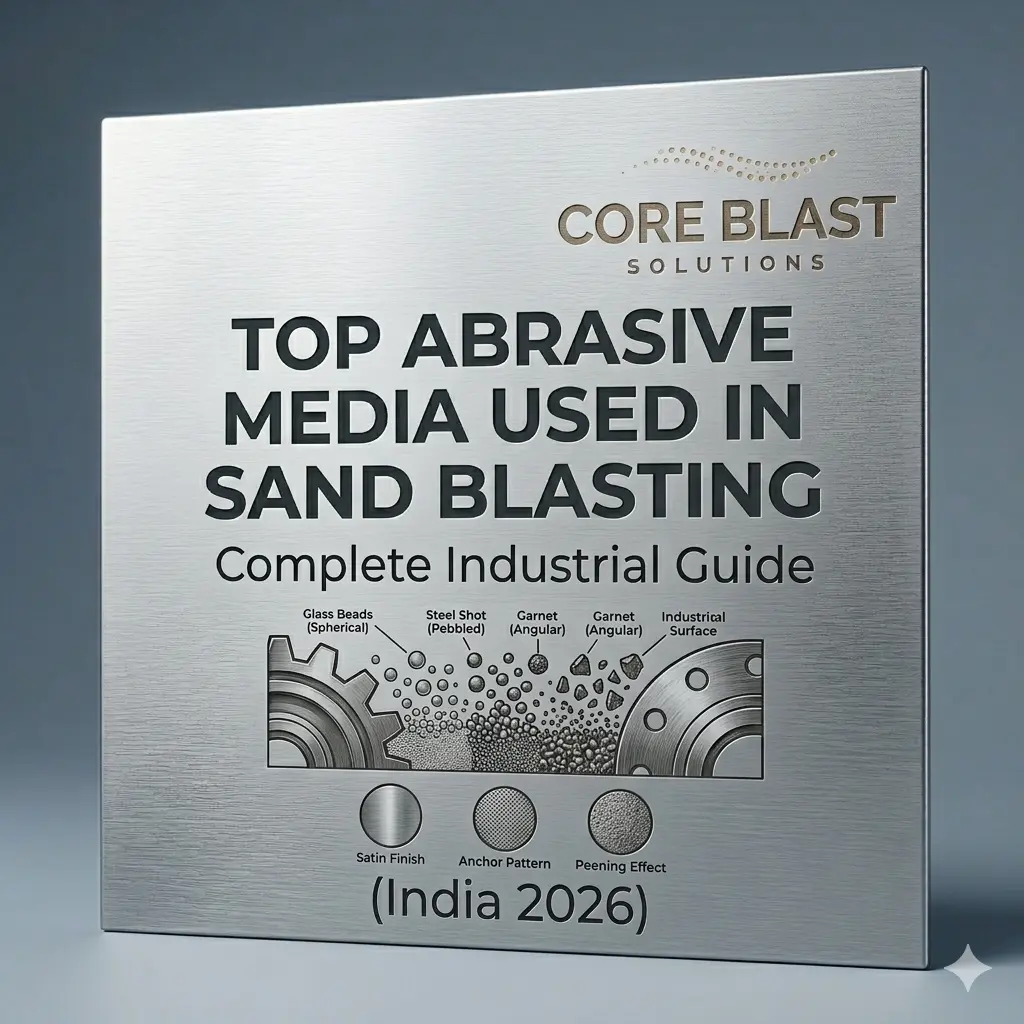
In the high-stakes world of automotive OEMs and Tier-1 supply chains, surface preparation has evolved from a cosmetic process to a core metallurgical requirement. As we integrate more lightweight alloys and EV-specific components, the industry relies on spherical glass bead blasting to meet stringent mechanical fatigue standards.
1. The Metallurgical Advantage: Beyond Cleaning
Glass bead blasting is a “cold-working” process. Unlike chemical etching or angular blasting, glass beads utilize Kinetic Energy Transfer to clean without material removal.
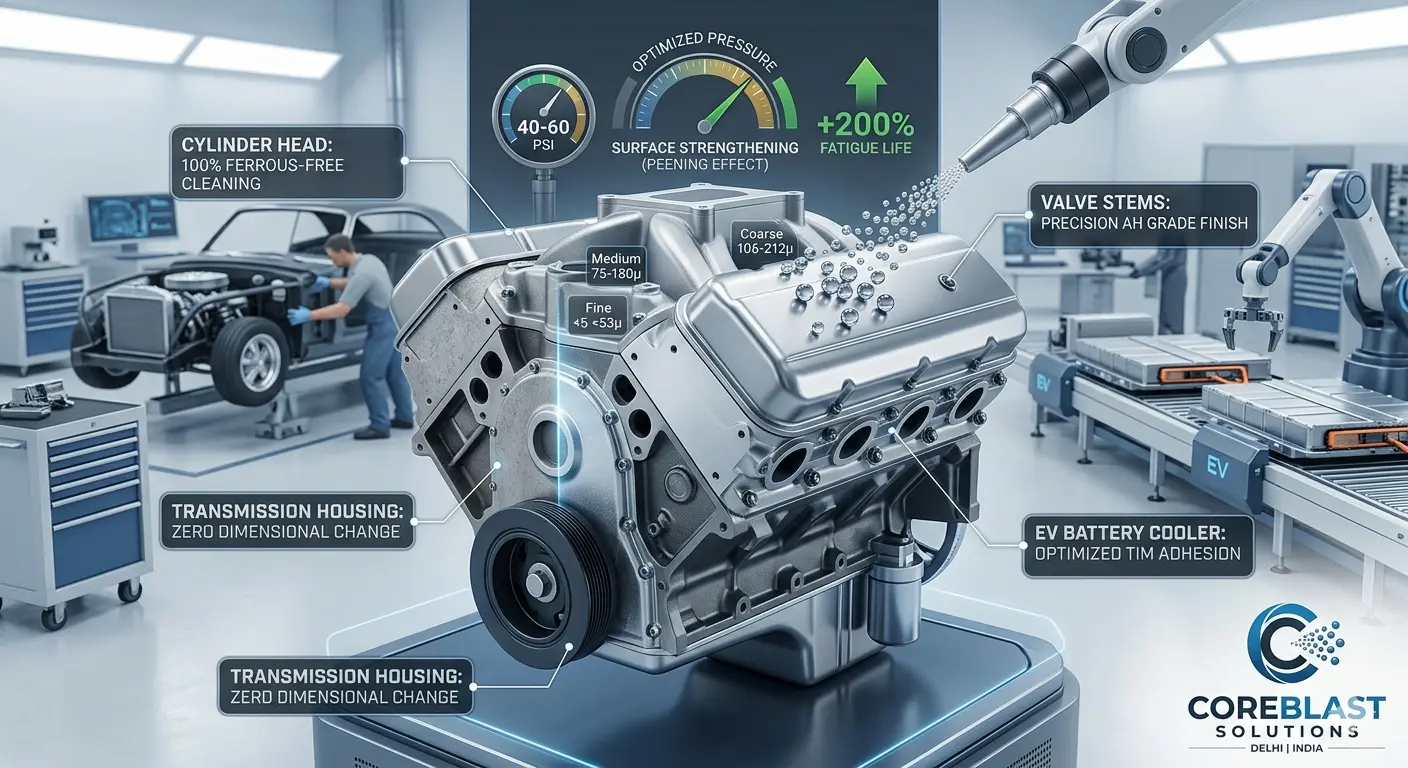
- Controlled Peening: According to SAE J442, controlled shot peening with glass beads introduces a uniform layer of compressive stress. This is critical for automotive valve springs and connecting rods to prevent Fatigue Failure, increasing component lifespan by up to 200%.
- Surface Profile Consistency: Following ASTM D7127 standards, glass beads maintain the “Peak-to-Valley” height required for critical engine seals, ensuring zero leakage in high-pressure environments.
2. Technical Grade Selection & Industry Standards
Selection must adhere to MIL-S-13165C (though a military standard, it is the global benchmark for industrial peening quality).Althoug it has been revoked , Still acceptable globally
| Application Category | Technical Grade | Micron Range | Industry Standard / Purpose |
| High-Stress Components | AH Grade (GB-13) | 45 – 90 µm | AMS 2431/6 – Micro-peening for fatigue resistance. |
| Aluminum Castings | AC / AB Grade | 75 – 180 µm | Removal of mold flash without altering tolerances. |
| EV Battery Coolers | AD Grade (No. 9) | 106 – 212 µm | Optimizing surface area for thermal interface materials (TIM). |
| Restoration (General) | AG Grade | 53 – 125 µm | Professional “Satin Finish” for alloy restoration. |
3. Specialized Automotive Applications in 2026
A. Power Electronics & EV Components
With the transition to Electric Vehicles (EVs), glass beads are now essential for preparing aluminum battery enclosures. Academic research in The Journal of Materials Processing Technology suggests that spherical blasting removes oxide layers while maintaining the surface’s electrical conductivity—a requirement that angular abrasives cannot meet without excessive pitting.
B. Precision Engine Rebuilding
For internal combustion engine (ICE) components, maintaining dimensional tolerance is non-negotiable. Glass beads are chemically inert, satisfying ISO 14001 environmental standards while ensuring no chemical reaction occurs with magnesium or aluminum alloy engine heads.
4. The Physics of Proper Execution
To achieve results compliant with AS9100 (Aerospace/Automotive quality standards), operators must manage the “Breakdown Rate.”
- Velocity: Exceeding 80 PSI often causes “Bead Shattering.” Shattered beads become angular, turning a peening process into an unintended grinding process.
- Recycling: High-quality soda-lime beads (Hardness 6-7 Mohs) allow for 30+ cycles in a closed-loop system, significantly reducing the carbon footprint of the workshop.
5. FAQ:
-
What is the benefits of glass beads over sand for automotive parts?
Beyond the health risks of Silicosis (banned under many safety standards), glass beads offer spherical impact. This peens the surface rather than etching it, preserving the part’s integrity as per ASTM standards.
-
Can glass beads be used on magnesium alloy wheels?
Yes. Because glass is chemically inert, it prevents the galvanic corrosion often triggered when metallic abrasives are used on magnesium or aluminum.
-
What is the recommended cleaning protocol after bead blasting?
Parts must be cleaned via high-pressure air or ultrasonic tanks to remove residual dust. In 2026, Coreblast Solutions recommends a post-blast pH-neutral rinse for any parts intended for high-voltage EV applications.
About the Author
Senior Technical Consultant, Coreblast Solutions
With over 15 years of experience in automotive surface engineering and industrial abrasive distribution, our lead author specializes in the implementation of SAE and ASTM standards for North Indian manufacturing hubs. Based in Delhi, they have consulted for Tier-1 automotive suppliers and aerospace maintenance facilities, focusing on optimizing media lifecycle and surface integrity in high-precision environments.